
Radon Mitigation and Basement Finishing: Which First?
Updated
Short answer
Part of Walls and Moisture.
What the numbers are
EPA's Consumer's Guide to Radon Reduction says a contractor fixing a home “generally ranges from $800 to $2500 (with an average cost of $1200),” depending on the house and the method chosen. The text is undated and national, and prices have moved since it was written, so read it as a floor for a current estimate, not as a quote (EPA, A Consumer's Guide to Radon Reduction (cost range, undated text)). EPA's newer cost page says most homes can be fixed for about the cost of other common home repairs and that your costs vary with the size and design of the house and the method (EPA, How much can a radon mitigation system cost?). No Rockford price is published. Get two estimates from licensed mitigators.
Why the order matters
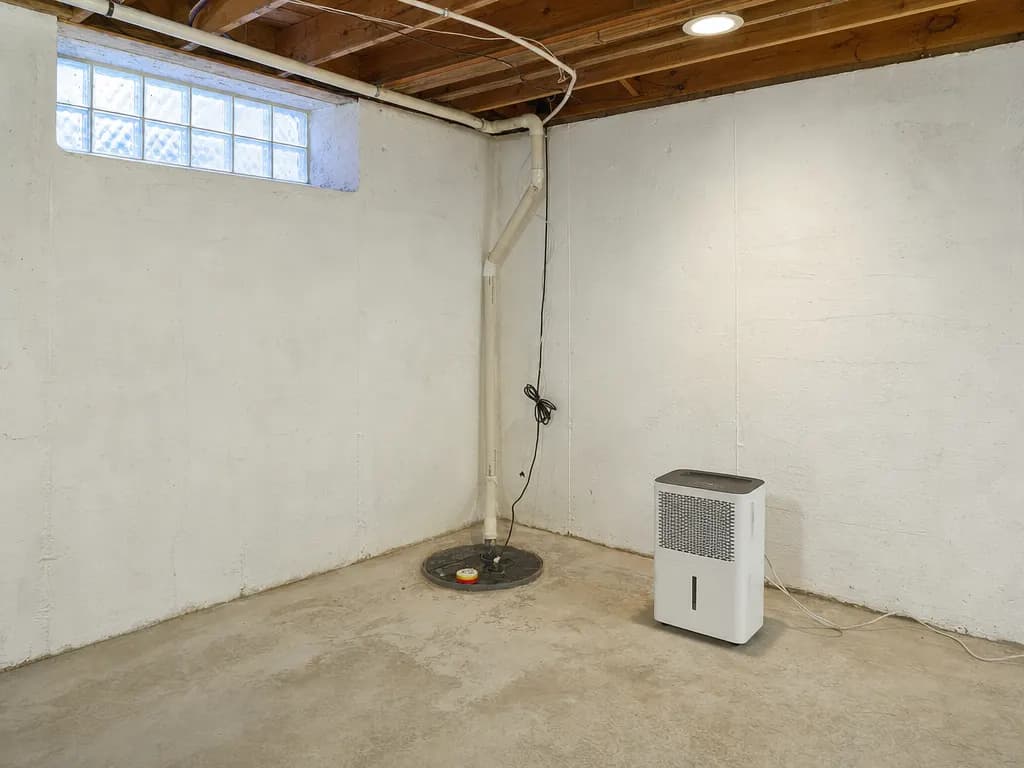
EPA's buyer and seller guide says that if you plan to finish an unfinished area, a radon test should be done before the project starts and after it ends, and that it is generally less expensive to put a reduction system in before or during renovations (EPA, Home Buyer's and Seller's Guide to Radon (Mar. 2018)). A system usually means a pipe from beneath the slab, up through the house and out above the roof, with a fan. Running that pipe before the walls are framed lets it sit inside a chase. After the walls are done the same pipe has to cut through finished drywall or run exposed.
The sequence
- Test first. Details are in the radon testing guide.
- Hire a licensed mitigator. IEMA says radon mitigators and measurement professionals are licensed by IEMA (IEMA, radon test guideline for real estate). The EPA guide also suggests asking for a guarantee that levels fall to 4 pCi/L or below, and for a post-installation test.
- Post-installation test. A test should be done within 30 days of installation, but no sooner than 24 hours after the system is running with the fan on.
- Frame around the pipe. Tell the framer where the pipe and fan run. Leave service access to the fan's electrical connection.
- Re-test after the finish. After you remodel, re-test in the lowest lived-in area to make sure the construction did not reduce the system's effectiveness.
Warranty and operating cost
EPA's guide also tells owners converting an unfinished basement into living space to ask the radon contractor whether the changes could void any warranties. It says most systems cause some loss of heated or cooled air, which can raise utility bills. Raise both with the mitigator before you sign.
Permits in Winnebago County
Loves Park's fee schedule has a specific “Radon” plumbing permit line at $50.00 for residential, so mitigation installs are permitted and inspected as plumbing work there. Other offices were silent on radon permits. Confirm with yours (City of Loves Park, fee schedule effective 2/15/2018). These fee schedules are undated on the permit offices' own sites. Confirm with the permit office before relying on a dollar figure.
Is it required?
No Illinois law requires you to test or mitigate during a remodel. The Radon Awareness Act is a disclosure law, covered in its own guide. The reason to act is the room you are building: you are adding a bedroom, a rec room or an office to the lowest floor of the house, and the CDC and IEMA say to test before and after.
Pricing a whole project? The cost page shows where radon fits against waterproofing and the rest.
Where to go next
This guide sits under Basement walls and moisture. Every price on this site, with its source and date, is on the basement finishing cost page. If this topic is on your list, these guides cover the neighbouring questions: Radon Test Before Finishing a Basement in Illinois, Illinois Radon Awareness Act and Your Basement, and Waterproofing a Rockford Basement Before Finishing.
Sources: IEMA, radon test guideline for real estate; IEMA, guidelines for home radon measurement; City of Loves Park, fee schedule effective 2/15/2018; Winnebago County Health Department, radon; EPA, A Consumer's Guide to Radon Reduction (cost range, undated text); EPA, How much can a radon mitigation system cost?; EPA, Home Buyer's and Seller's Guide to Radon (Mar. 2018)
Quick answers
How much does radon mitigation cost?
EPA's Consumer's Guide to Radon Reduction puts a contractor-installed system at $800 to $2,500 with an average of $1,200. The text is undated and national, so ask local mitigators for current estimates. The cost page shows the rest of a basement budget.
Should I mitigate radon before or after finishing the basement?
Before. EPA says it is generally less expensive to install a radon reduction system before or during renovations than afterwards, and the pipe is easier to hide in a wall that is still open.
Who is allowed to install radon systems in Illinois?
IEMA says radon mitigators and measurement professionals are licensed by IEMA. Ask for the license number and an estimate before you hire anyone.
Do I need to re-test radon after the basement is finished?
IEMA says to re-test if any renovations or additions are made, and EPA says to re-test in the lowest lived-in area after a remodel to make sure the work did not reduce the system's effectiveness.
Planning a basement finish?
Tell us the size of the basement and what you want down there. We reply with a price range first.