
Basement Bathroom Permit and Plumbing Rules
Updated
Short answer
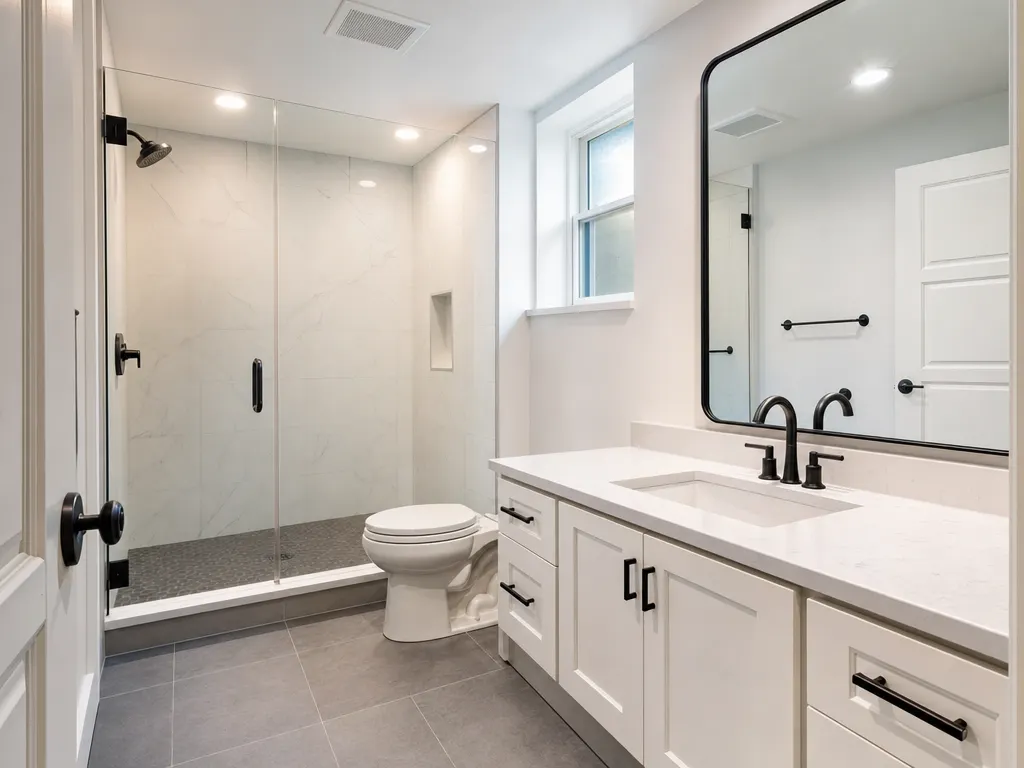
Part of Basement Bathroom.
Who can pull the permit
The Illinois Plumbing License Law, 225 ILCS 320/18, says:
“a city, town, village, township, or county that requires a permit for installation and repair of plumbing may not issue that permit without verification that the applicant has a valid plumbing license or that the applicant is the owner occupant of a single family residence that is the subject of the permit.”
In plain terms, a licensed plumber can pull the permit, and so can you if you own and live in the single family home that is the subject of it. A landlord, a flipper or a relative cannot. Rockford's permit page repeats this rule, and Loves Park's application asks for the plumber's Illinois license number (Illinois Plumbing License Law, 225 ILCS 320/18, City of Rockford, Mechanical and Plumbing Permits). Owner-pulled permits are still inspected, and the work still has to meet the Illinois Plumbing Code, which Rockford applies as the 2014 IDPH code with local amendments.
What the permit offices charge
Plumbing is one of the trade lines under the building permit. Rockford adds $56 per trade permit; Winnebago County adds a processing fee of $40.00 per trade (structural, electrical, HVAC, plumbing); Loves Park prices plumbing at $15.00 per fixture opening. Loves Park counts a sump pump as one fixture. The fee schedule also lists a radon plumbing permit line, so a radon system is permitted as plumbing there. These fee schedules are undated on the permit offices' own sites. Confirm with the permit office before relying on a dollar figure.
The ceiling can be lower in the bathroom
The 2021 code lets bathrooms, toilet rooms and laundry rooms have a 6 foot 8 inch ceiling instead of 7 feet. If part of your basement is short, that corner is the natural place for the bathroom. See the ceiling height guide.
The drainage question comes first
A basement bathroom sits below the house sewer line in many homes, and the Illinois Plumbing Code treats that differently from a bathroom upstairs. Sanitary waste that cannot flow by gravity has to go to a gas-tight, covered, vented sump with automatic ejection equipment, and a footing-drain sump cannot take sewage. That distinction decides the cost and the noise level of the project. It is explained in the sump pump and sewage ejector guide.
What a basement bathroom costs
A bathroom adds a large block to a budget. Cost guides price the whole room and the fixtures separately. These are national figures, not Rockford quotes.
| Item | Range | Market | Source and date |
|---|---|---|---|
| Bathroom | $2,500 to $12,500 | national | HomeGuide, updated February 6, 2026 |
| Bathroom | $2,500 to $5,000 | national | Thumbtack, updated April 9, 2026 |
| Plumbing | $2,500 to $15,000 | national | This Old House, page titled 2026 Pricing, update date not shown |
| Toilet | $225 to $530 each | national | Angi, updated July 9, 2026 |
| Shower | $1,100 to $8,500 each | national | Angi, updated July 9, 2026 |
The cost page places these against the full range, and the basement bathroom cost guide goes line by line.
Inspections you should expect
Plumbing is typically inspected at rough-in, before the pipes are covered, and again at the end. Rockford asks for 24 hours' notice for every inspection. For a slab cut, ask the office whether it wants to see the underground drain before the concrete is patched. We found no published inspection list for basement bathrooms, so confirm with the office. A drain that is buried before inspection can mean breaking the new concrete again.
Fixtures that need special attention
- A shower or tub on a slab needs a drain at the right depth and a floor that slopes to it.
- A toilet below the sewer line needs the ejector pit described in the ejector guide.
- A laundry sink or a wet bar adds drains and vents. See wet bars and kitchenettes.
- A bathroom fan should vent outdoors, not into the ceiling space.
Ask any plumber for a written scope that names every fixture, the pit if one is needed, the vent route and the permit. A bathroom bid that says only “rough in bath” leaves out the items that cost the most.
Where to go next
This guide sits under Basement bathrooms. Every price on this site, with its source and date, is on the basement finishing cost page. If this topic is on your list, these guides cover the neighbouring questions: Sump Pump vs Sewage Ejector for a Basement Bathroom, Cost to Add a Bathroom to a Basement, and Minimum Ceiling Height for a Finished Basement.
Sources: Illinois Plumbing License Law, 225 ILCS 320/18; Illinois Plumbing Code, 77 Ill. Adm. Code 890.1360; City of Rockford, Mechanical and Plumbing Permits; City of Loves Park, fee schedule effective 2/15/2018; Winnebago County, building fee schedule (Ordinance 2016 CO 073); City of Rockford, permit fee schedule (undated PDF); 2021 IRC R305.1 ceiling height (ICC); HomeGuide; Thumbtack; This Old House; Angi
Quick answers
Can a homeowner do their own basement plumbing in Illinois?
A city or county that requires a plumbing permit may issue it to the owner-occupant of a single family residence as well as to a licensed plumber. The work still has to pass inspection under the Illinois Plumbing Code.
What ceiling height does a basement bathroom need?
Bathrooms, toilet rooms and laundry rooms need a ceiling of at least 6 feet 8 inches under the 2021 model code, versus 7 feet for other habitable space.
How much is a plumbing permit for a basement bathroom?
Rockford adds a per-trade permit fee under the building permit, the county adds a processing fee per trade, and Loves Park charges per fixture opening. Offices change schedules, so confirm figures, and see the cost page for the project range.
Does the sump pump count as a plumbing fixture?
In Loves Park's fee schedule a sump pump counts as one fixture opening at $15.00. Other offices price it as part of the plumbing trade permit.
Planning a basement finish?
Tell us the size of the basement and what you want down there. We reply with a price range first.