
Sump Pump vs Sewage Ejector for a Basement Bathroom
Updated
Short answer
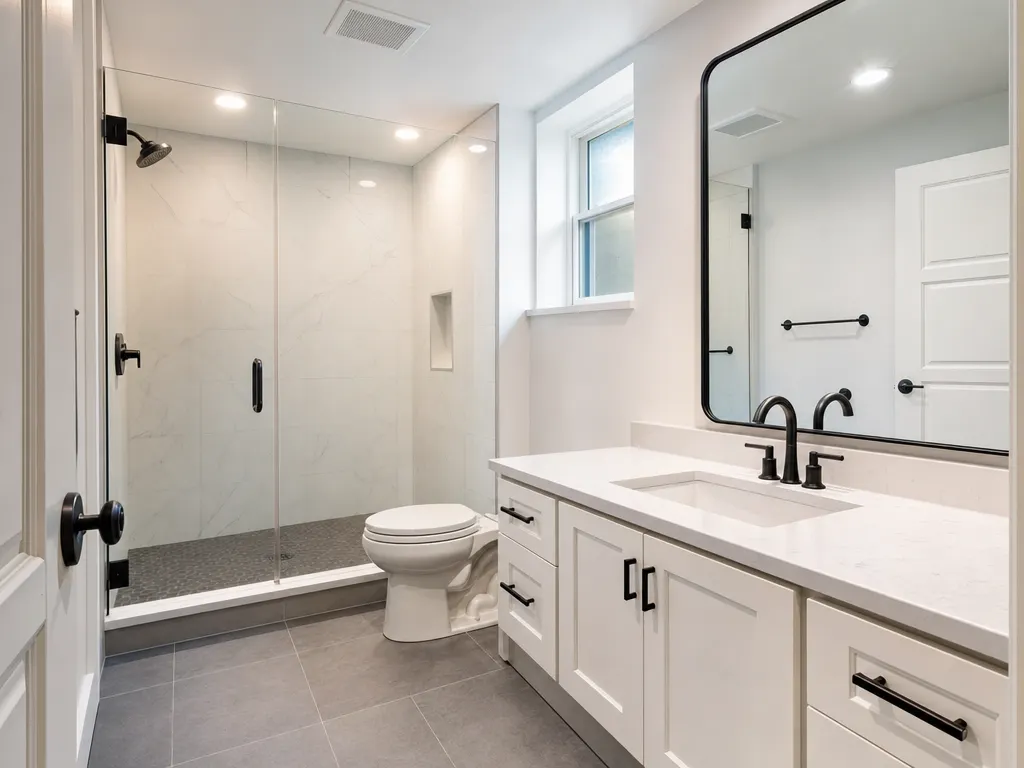
Part of Basement Bathroom.
Two pits, two jobs
A basement can have either or both. A sump pump sits in a pit fed by the footing drain and pushes groundwater outside. A sewage ejector sits in a sealed pit that takes waste from a toilet, shower or sink below the level of the sewer line and lifts it to the sanitary drain. The state rule is explicit about keeping them apart. The Illinois Plumbing Code, 77 Ill. Adm. Code 890, says:
“Sanitary wastes that cannot be discharged by gravity flow shall be discharged into a gas-tight, covered and vented sump from which the waste shall be lifted and discharged into a sanitary waste drain by automatic sewage ejection pumping equipment.”
The practical reading is short. Do not put a toilet on the sump. A basement bathroom below the sewer line needs an ejector pit that is gas-tight, covered and vented, with an automatic pump (Illinois Plumbing Code, 77 Ill. Adm. Code 890.1360). The two systems do not share a pit, a pump or a discharge line.
Why the distinction matters when you finish
- Venting. The ejector pit is vented, which means a vent line through the structure to above the roof or to a connection to the house vent system. A finished wall has to leave room for it.
- Sealing. A gas-tight cover keeps sewer gas out of the room. It is not the same lid as a sump.
- Access. Both pumps need service access. Do not tile over either lid.
- Discharge. Sump water goes outside. Sewage goes to the sanitary drain. Rockford's stormwater manual says redirecting sump pumps to a sanitary sewer is not allowed, which closes off the shortcut of tying a sump to the house drain (City of Rockford, Technical Guidance Manual (2015 court exhibit)).
Does your basement need an ejector?
That depends on whether the planned fixtures sit below the building drain. A plumber can check the depth of the sewer line where it leaves the house and compare it with the basement slab. If the drain is deep enough, a bathroom can run by gravity. If not, the ejector is part of the price. We found no source that lists a standard Rockford depth, so the check has to happen at your address.
Cost
Cost guides price plumbing and sump pumps but not an ejector pit by itself. This Old House shows a basement plumbing range, and HomeGuide shows a basement bathroom range. These are national guides.
| Item | Range | Market | Source and date |
|---|---|---|---|
| Bathroom | $2,500 to $12,500 | national | HomeGuide, updated February 6, 2026 |
| Bathroom | $2,500 to $5,000 | national | Thumbtack, updated April 9, 2026 |
| Plumbing | $2,500 to $15,000 | national | This Old House, page titled 2026 Pricing, update date not shown |
| Sump pump | $600 to $2,500 | national | HomeGuide, updated February 6, 2026 |
| Sump pump | $600 to $1,600 | national | This Old House, page titled 2026 Pricing, update date not shown |
| Sump pump | $575 | national | HomeAdvisor, updated June 20, 2026 |
See the cost page for each source and date, and the basement bathroom cost guide.
Permits and who does the work
Plumbing needs a permit. Illinois lets a city or county issue it only to a licensed plumber or to the owner-occupant of a single family residence. Details are in the permit and plumbing rules guide.
Planning questions for a bathroom below the sewer
- How deep is the building drain where it leaves the house, and how does that compare to the finished floor?
- Can the bathroom move to a spot where gravity works, near the drain, even if the layout is less ideal?
- Where will the vent line run, and does a wall chase exist for it?
- How much clear space does the pit lid need for service?
- Does the pump have an alarm, and who hears it?
Service access
An ejector pump is a mechanical device that handles sewage, and it will need service. A gas-tight lid means it is not opened casually, and the room around it should be finished with that in mind. Put the pit in a utility closet or under a removable panel, not under a tiled floor. Ask the plumber for the pump model and the replacement lead time and keep the paperwork with the permit file.
Where to go next
This guide sits under Basement bathrooms. Every price on this site, with its source and date, is on the basement finishing cost page. If this topic is on your list, these guides cover the neighbouring questions: Basement Bathroom Permit and Plumbing Rules, Finishing a Basement With a Sump Pump, and Cost to Add a Bathroom to a Basement.
Quick answers
Can a toilet drain to a sump pump?
The Illinois Plumbing Code says sumps and ejectors handling subsoil drainage and footing drains cannot receive sewage. Sanitary waste from below the sewer must go to a gas-tight, covered, vented sump with automatic sewage ejection equipment.
Does a basement bathroom always need a sewage ejector?
Only if the fixtures sit below the building drain so the waste cannot flow by gravity. A plumber can check the sewer depth at your address.
Does a sewage ejector pit need a vent?
The code describes it as gas-tight, covered and vented, so yes, a vent is part of the pit. The finished walls need to leave room for it.
How much does a basement bathroom cost?
HomeGuide puts a basement bathroom at $2,500 to $12,500, a national range updated February 6, 2026. See the cost page for more.
Planning a basement finish?
Tell us the size of the basement and what you want down there. We reply with a price range first.