
DIY vs Hiring a Contractor to Finish a Basement
Updated
Short answer
Part of Framing and Drywall.
What labor is worth
HomeGuide puts labor alone at $6 to $20 per square foot of a basement finish, out of $30 to $50 per square foot in total. Angi's Chicago page puts labor at 50 to 70 percent of cost. So the labor you replace is worth a third to a half or more of a typical finish. That is the case for DIY. The case against is the chance of getting a structural, moisture or code detail wrong where it is hidden behind drywall. See the cost page for sourced ranges.
Task by task
| Task | Owner can do it? | What the sources say |
|---|---|---|
| Permit | Yes, in the owner's name where the office allows | Rockford requires one for alteration of a structure over 120 sq ft. |
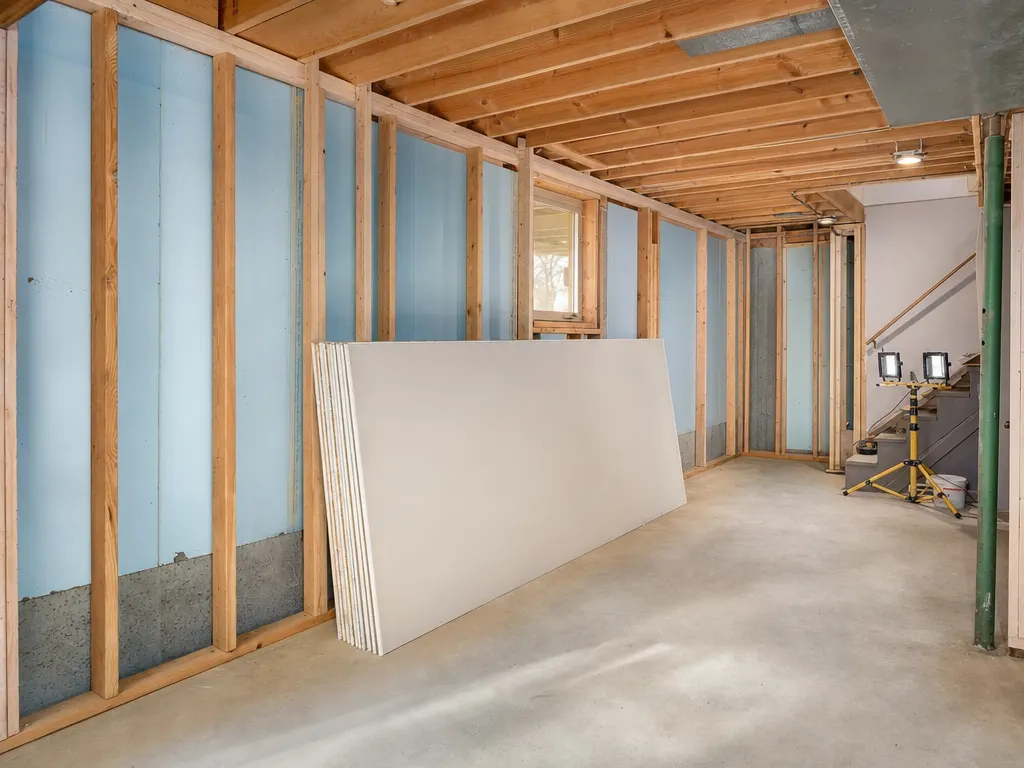
| Framing, insulation, drywall, paint | Yes, with inspections | Rockford asks for 24 hours' notice before inspections. Foam, a capillary break and a floor gap are the details to get right. |
| Plumbing | Yes for the owner-occupant of a single family home | Illinois law lets a city or county issue the plumbing permit to a licensed plumber or the owner-occupant. |
| Electrical | Ask the permit office | Rockford registers electrical contractors at $25 a year. We found no sourced rule on owner-pulled electrical permits. |
| Egress cut | Rarely | Structural cut in a foundation, plus excavation and a 811 locate. |
| Radon mitigation | No | IEMA licenses radon mitigators. You can buy and read a test kit yourself. |
| Waterproofing | Partly | Grading and gutters yes; interior drains and pumps are plumbing work. |
The rules that still bind you
- Permit and fees. Rockford doubles fees, not less than $274, for starting without one. See the fee guide.
- Code. Egress, alarms and ceiling height apply to your work as they do to a contractor's. See the bedroom guide.
- Lead. EPA's rule generally does not cover homeowners working on their own pre-1978 home (EPA, Lead Renovation, Repair and Painting Program). It does cover a hired firm.
- The Home Repair and Remodeling Act. It protects you when you hire. It does nothing for your own labor.
A split that many owners choose
Hire the work behind the walls and the work with permits attached: egress, electrical, plumbing and insulation. Keep the visible finish: paint, trim, flooring and fixtures. That puts the inspected, concealed and licensed work with professionals and the forgiving work with you. Ask the contractor to price it that way and to leave the rest as a deduction. Clear scope lines in the contract protect you either way; see the contract checklist.
Before you start
Settle the questions that cost the most when wrong: radon and moisture. See the stages guide. And list who is on site: the Attorney General says contractors must carry public liability and property damage insurance, and you carry the risk for your own work and for anyone you hire informally.
What a mistake costs by task
Not every task has the same downside. A crooked paint line is a weekend. A drywall seam can be redone. A framing mistake near an egress opening, an undersized window, or a plumbing connection that leaks inside a wall is a tear-out. A radon system that does not work leaves the risk the project was supposed to remove. Rank the tasks by what it costs to redo them after the drywall is up, and hire the ones at the top of that list.
Where to go next
This guide sits under Framing and drywall. Every price on this site, with its source and date, is on the basement finishing cost page. If this topic is on your list, these guides cover the neighbouring questions: How to Hire a Basement Contractor in Illinois, Framing Basement Walls Against Concrete, Cheapest Way to Finish a Basement Without Cutting Corners, and Stages of Finishing a Basement, in Order.
Sources: HomeGuide; Angi, Chicago IL; City of Rockford, Building Permits; City of Rockford, permit fee schedule (undated PDF); Illinois Plumbing License Law, 225 ILCS 320/18; City of Rockford, Electrical Permits; IEMA, radon test guideline for real estate; Illinois Attorney General, How to Choose a Contractor; EPA, Lead Renovation, Repair and Painting Program
Quick answers
Can a homeowner finish their own basement in Illinois?
With the permits and inspections your municipality requires. Illinois lets the owner-occupant of a single family home pull a plumbing permit, and EPA's lead rule generally does not cover homeowners working on their own home.
How much does DIY save on a basement finish?
HomeGuide puts labor alone at $6 to $20 per square foot, and Angi's Chicago page puts labor at 50 to 70 percent of cost. The saving is real but so is the risk of hidden mistakes. See the cost page.
Do I need a permit if I do the work myself?
Rockford requires a permit for alteration of a structure over 120 square feet, whoever does the work. Starting without one doubles the fees, not less than $274.
Which parts should I hire out?
Egress cutting, electrical, radon mitigation and any plumbing you are not comfortable with. Radon mitigators are licensed by IEMA.
Planning a basement finish?
Tell us the size of the basement and what you want down there. We reply with a price range first.