
Preventing Mold in a Finished Basement
Updated
Short answer
Part of Walls and Moisture.
The core rule
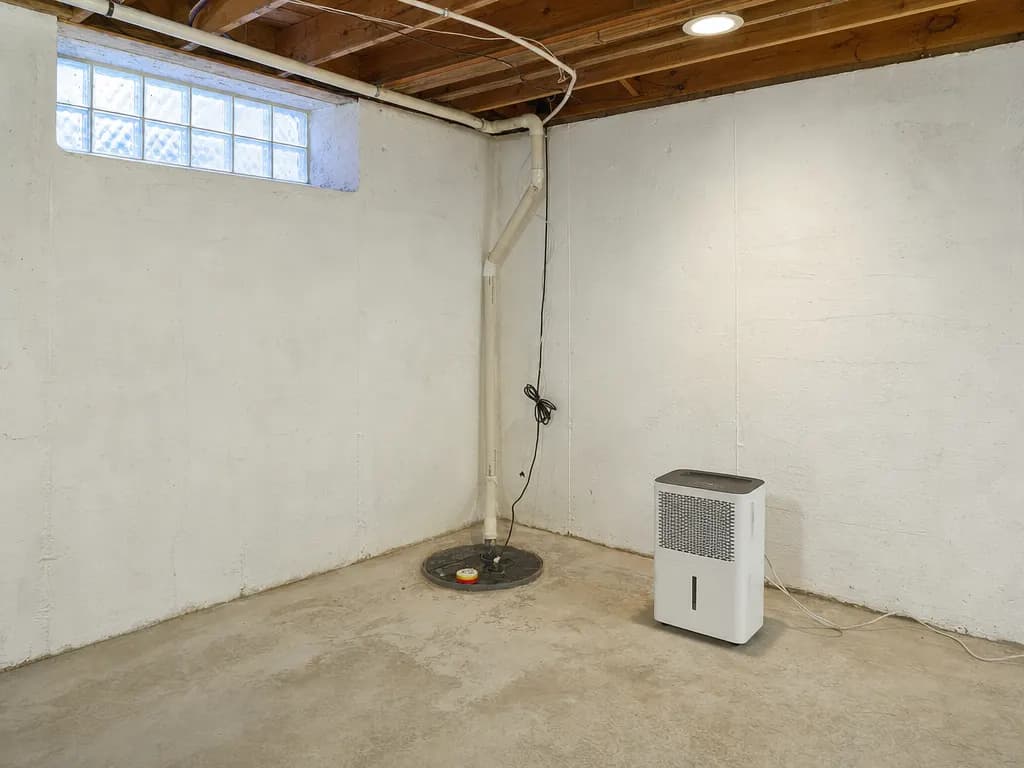
EPA's guide says it in one line: “The key to mold control is moisture control.” Mold can grow on virtually any organic material as long as moisture and nutrients are present, and if mold is already growing you must clean it up and fix the water problem (EPA, A Brief Guide to Mold, Moisture and Your Home). The CDC adds the timing: clean up and dry out fully and quickly, within 24 to 48 hours, after a flood (CDC, About Mold and Your Health). In a finished basement the organic material is paper facing on drywall, wood framing, carpet and cardboard storage. You cannot remove those, so you control the water.
Six design choices that reduce mold risk
- Fix liquid water first. See the waterproofing guide.
- Insulate with foam against the concrete. The Department of Energy warns that when cellulose or fiberglass sits against basement walls it can absorb large amounts of moisture and stay damp (U.S. DOE, Basement insulation systems (Building America Top Innovation)).
- Skip interior plastic. DOE says not to install polyethylene sheeting, vinyl or foil wallpaper, or epoxy, oil or alkyd paint on the interior of basement walls, because they are Class I vapor retarders that can trap moisture. See the vapor barrier guide.
- Leave a gap at the floor. DOE advises at least a half-inch gap between the drywall and the floor when finishing the wall.
- Raise the floor finish off the slab. See the subfloor guide.
- Control humidity. Measure it and run a dehumidifier when needed. See the dehumidifier guide.
Materials that help, and what they cannot do
Paperless drywall facing removes the paper from the wall, which removes one food source. They do not make a wall waterproof, and the framing behind them is still wood. Read the moisture-resistant drywall guide for what the label means. The most reliable protection is a dry wall and low humidity.
Habits after the finish
- Vent clothes dryers and bathroom fans to the outside. EPA says dryers must be vented outdoors.
- Keep storage off the floor and away from exterior walls.
- Check the sump pump each season and the humidity meter every few weeks.
- If you see condensation or moisture on walls or pipes, act quickly to dry the surface and reduce the source, as EPA advises.
If you find mold
EPA says to clean it up promptly and fix the water problem. For large areas the agency suggests following its remediation guidance. A buried leak behind a finished wall may need cutting open. That is a repair worth planning for, and a reason to leave a service panel at the sump and the water heater.
A 48-hour routine for a leak
The CDC and EPA both put the line at 24 to 48 hours. If a pipe leaks, the sump fails or a window well floods, stop the water, remove standing water and wet items, run fans and the dehumidifier, and check the walls and the floor edge. If drywall or carpet stayed wet past that window, plan to cut it out and replace it. The reason to leave a half-inch gap at the floor and a service panel at the sump is that this is the day you will need them.
An annual inspection
- Look behind furniture on the exterior walls for stains or a musty smell.
- Check the base of the drywall at the floor gap and the baseboards for swelling.
- Test the sump pump and look at the discharge outside.
- Read the humidity meter log for the year.
- Look at the water heater, the washing machine hoses and the bathroom supply lines for slow leaks.
Where to go next
This guide sits under Basement walls and moisture. Every price on this site, with its source and date, is on the basement finishing cost page. If this topic is on your list, these guides cover the neighbouring questions: Dehumidifier for a Finished Basement in Winter, Moisture-Resistant Drywall for a Basement, Do You Need a Vapor Barrier in a Basement Wall?, and Waterproofing a Rockford Basement Before Finishing.
Quick answers
What causes mold in a finished basement?
Moisture. Mold needs water and an organic material to grow on, such as paper facing, wood or carpet. Leaks, condensation and high humidity all supply the water.
How fast do I need to dry a wet basement?
The CDC and EPA say to clean up and dry out within 24 to 48 hours to prevent mold growth.
Should drywall touch the basement floor?
The Department of Energy recommends leaving at least a half-inch gap between the drywall and the floor when finishing a basement wall.
Does mold-resistant drywall stop mold?
It removes the paper food source but does not make a wall waterproof. Keeping the wall dry and the humidity low is what prevents mold.
Planning a basement finish?
Tell us the size of the basement and what you want down there. We reply with a price range first.